Load Binders
Load binders for tensioning chain over heavy loads on flatbeds, step decks and lowboys — ratchet binders for controlled take-up, lever binders for speed. Forged in G70 and G80 alloy steel in our own works, with pelican hooks, clamp hooks or plain eyes to suit the chain you already run.
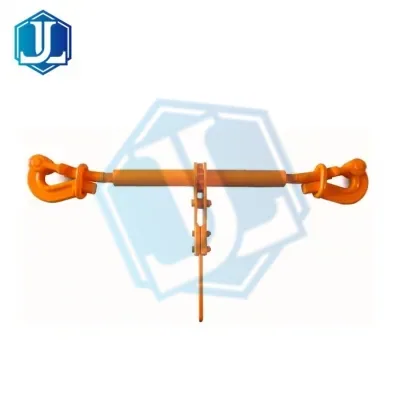
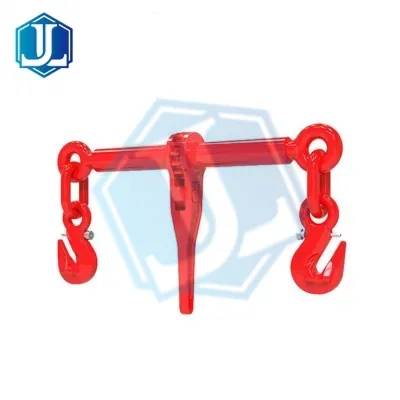
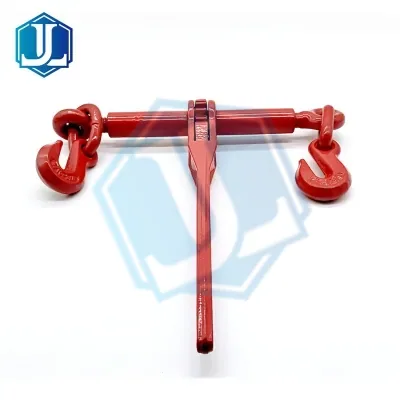
Ratchet binder or lever binder
A ratchet binder takes up chain a few links at a time with a handle you crank, and it stays where you leave it. That control is why it is the default for steel, machinery and anything where a sudden release would be dangerous.
A lever binder is faster: one pull over centre and the chain is tight. The trade is that the handle stores energy as it goes over centre, and if the hook slips the handle comes back at whoever is standing in front of it. Both types are in the range; the choice is about how often the load changes, not about price.
Match the binder to the chain, not to the load
A binder is only as strong as the chain it pulls, and a binder rated above the chain just moves the failure to a cheaper part. Work from the chain grade and size you already use, then pick the binder that matches it.
Mixing grades is the most common mistake we see in enquiries: a G80 binder on G70 transport chain. The parts fit, the ratings do not.
| Binder | Chain it suits | Hook end | Where it is used |
|---|---|---|---|
| Ratchet, G70 | 5/16″–3/8″ G70 transport chain | Pelican hook | Flatbed and step deck, US style |
| Ratchet, G80 | 3/8″–1/2″ G80 alloy chain | U-shaped clamp hook | Heavy machinery, lowboy |
| Lever, G70 | 5/16″–3/8″ G70 transport chain | Slip hook or clevis | Fast turnover, short hauls |
The take-up mistakes that break binders
Over-tightening is the first. A binder is for removing slack and holding it, not for stretching the chain; a chain pulled past its elastic limit will not spring back and the binder takes the load.
The second is a hook loaded on its tip instead of in its saddle, which turns a rated hook into a lever. The third is a binder with no safety wire or clip on the handle, which lets vibration walk it open on a long haul.
Questions buyers ask before ordering
What is a load binder used for?+
Tensioning chain over a load so it cannot move — steel coils, timber, machinery and containers on flatbeds, step decks and lowboys. It replaces rope and come-alongs on loads that need to stay tight for a whole trip.
Should I buy a ratchet or a lever binder?+
Ratchet if the load changes, if the cargo is heavy, or if anyone works near the chain while it is under tension. Lever if speed matters more than control and the same load is done the same way every day.
Can I use a G80 binder on G70 chain?+
Physically yes, and you should not. The assembly is only as strong as its weakest part, so an oversized binder hides a chain that will fail first. Match the grade.
What hook ends are available?+
Pelican hooks for transport chain, U-shaped clamp hooks for alloy chain, and plain eyes or clevis ends where the chain is fixed. Tell us the chain size and we will match the end.
Do you supply test certificates?+
Yes, batch test certificates with the shipment, and third-party inspection through TÜV or SGS on request.
Need load binders to your own specification?
Widths, lengths, colors, logo printing, hook types and packaging — all made to order. Send your drawing or reference sample.