Boat & Offshore Anchors
HHP and stockless anchors for ships, workboats and yachts — Stevpris MK5, AC-14, Hall, Flipper Delta, N-type pool, M/SR CB711-95, mushroom and folding grapnel. Buyers also search these as ship anchors, boat anchors or offshore anchors.
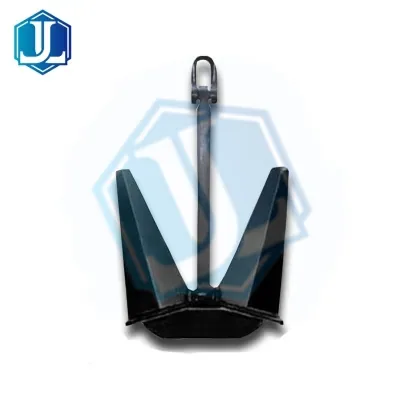
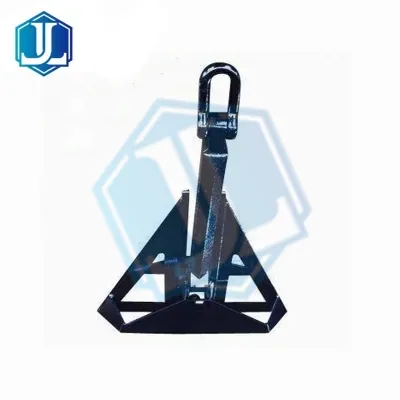
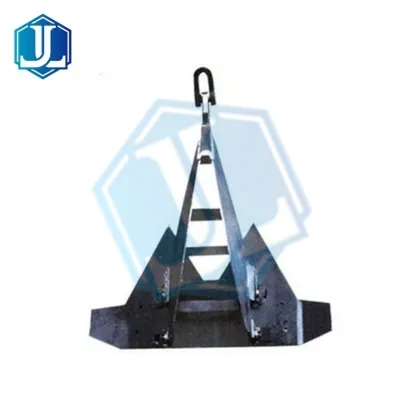
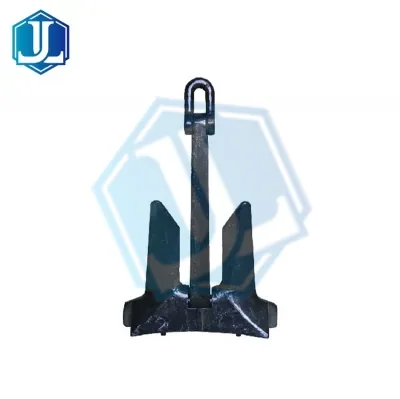
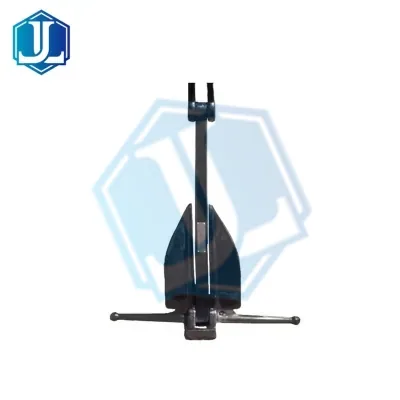
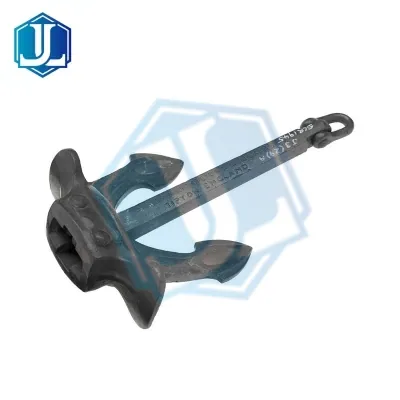
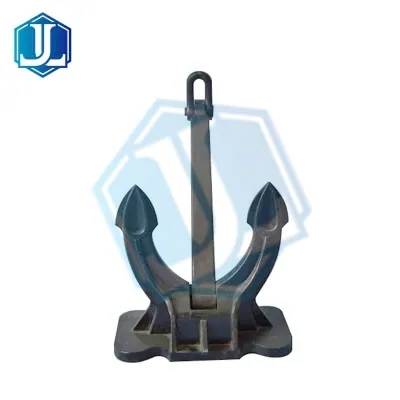
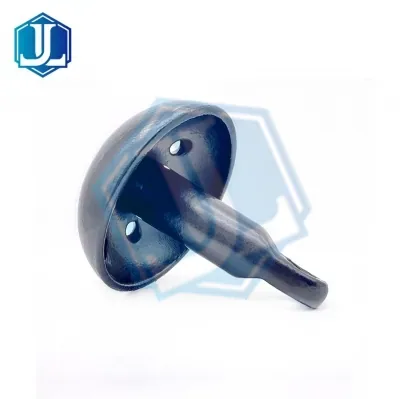
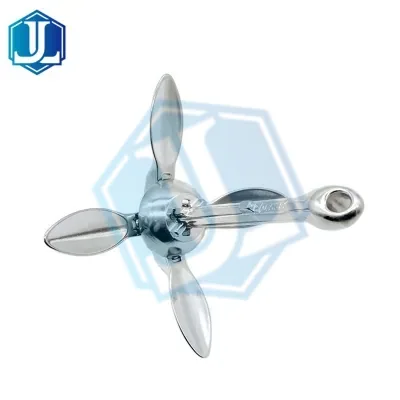
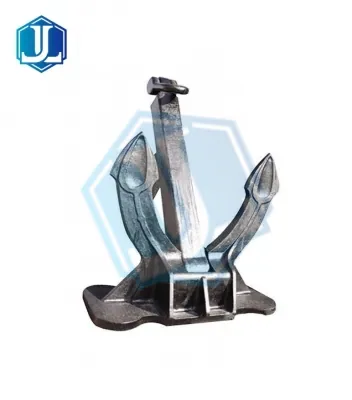
Anchor types, and the job each one is good at
An anchor is chosen by the seabed, the vessel and the stowage — not by mass alone. This is the short version of how we route an inquiry. If your case is not in the table, send the vessel data and we will say which pattern we would quote.
| Type | Holding class | Typical service |
|---|---|---|
| Stevpris MK5 (welded) | HHP | Offshore mooring, AHTS, semi-submersibles, dredgers |
| AC-14 (stockless, balanced) | HHP | Ships with hawse pipes, tugs, workboats |
| Flipper Delta (welded fin) | HHP | Pipeline and dredge work, temporary moorings |
| N-type balanced pool | HHP | Harbor and offshore work with limited swing room |
| M/SR CB711-95 | HHP | Newbuilds specified to the Chinese standard (CCS) |
| Hall (stockless) | Standard | General cargo tonnage, hawse-pipe stowage |
| Mushroom | Light | Small craft, mud and soft seabed, permanent moorings |
| Folding grapnel | Light | Dinghies, kayaks, diving and reef work |
What the HHP mark actually promises
HHP is a class mark, not a marketing word. A classification society accepts an anchor as high holding power when its holding power in the standard seabed test reaches at least twice that of an ordinary stockless anchor of the same mass. The super high holding power (SHHP) mark is four times.
That ratio is established by bollard-pull trials or by an approved calculation, and it follows the anchor's geometry — fluke area, shank angle and the way the anchor buries. Two anchors of the same mass can carry very different class marks, which is why the approval matters more than the shape on the drawing.
Practical consequence: if your specification says HHP, ask for the class approval of the pattern, not only a mill certificate for the steel.
How the required anchor mass is decided
Anchor mass and chain diameter come out of the vessel's Equipment Number, not out of a rule of thumb by length. The number is built from displacement and windage:
EN = Δ2/3 + 2 · B · h + 0.1 · A
where Δ is the molded displacement in tonnes, B the molded breadth in metres, h the effective freeboard from the summer load line to the top of the uppermost house, and A the profile area of hull and superstructure above the waterline, in square metres.
Each class society publishes its own table that turns EN into anchor mass, chain diameter and cable length. Give us Δ, B, h, A and the class you are building to (ABS, DNV, LR, BV, NK or CCS) and we quote against that table instead of guessing.
Cast or welded, and what can be certified
Stockless patterns such as AC-14 and Hall are cast. HHP patterns such as Stevpris and Flipper Delta are normally welded from plate, which is how they can be built in sizes that would be impractical to cast.
Finish is black paint, hot-dip galvanizing or a two-pack epoxy system. Galvanizing adds thickness at the fluke edges, so it has to be called out on the drawing — otherwise the finished mass drifts outside the class tolerance.
- Mill certificates to EN 10204 3.1 for plate and castings
- Dimensional and mass report against the approved drawing
- Proof load and holding power test reports where the class requires them
- Class-society witness and stamping on request — this is the item that adds real lead time
- Third-party inspection through TÜV, SGS or BV at your cost
The handling parts have to match the bow
An anchor that does not fit the hawse pipe is a delay, so we quote the handling parts with the anchor: bow rollers and brackets, anchor shackles, swivels and deck pad eyes. Tell us the chain diameter and the hawse pipe opening and the bracket is made to suit rather than picked from a list.
The chain itself is quoted from the same Equipment Number table — see anchor chain for the grades and what the certificate has to cover.
Questions buyers ask before ordering
What is the difference between HHP and a standard stockless anchor?+
Holding power per unit of mass. A class-accepted HHP anchor holds at least twice what an ordinary stockless anchor of the same mass holds in the standard test, and SHHP is four times. HHP patterns are usually welded plate designs with a large fluke area; standard anchors are cast stockless patterns such as Hall.
Can you supply an anchor with a classification society certificate?+
Yes — ABS, DNV, LR, BV, NK and CCS are all workable. Tell us the class and the approved drawing or the pattern you are specifying. Witness testing and stamping are arranged with the class, and they are the reason a certified anchor takes longer than an uncertified one.
What do you need from me to quote an anchor?+
Displacement, breadth, freeboard and profile area — or simply the Equipment Number from the class table. Plus anchor type, mass, chain diameter, class and finish. With those we can quote a specific mass and pattern the same day.
Do you make anchors to our own drawing?+
Yes. OEM and ODM are normal work for us: patterns for cast anchors, welding procedures and jigs for fabricated ones, and a sample before the production run.
How is the anchor marked?+
Mass, pattern or type designation, heat number, and the class stamp where the anchor is certified. Class rules dictate where the marking goes — usually on the crown — so that it stays legible after years in service.
Is an anchor rated by working load limit, like a sling?+
No. An anchor is specified by mass and holding power; there is no WLL marking. If your inquiry says WLL, the number you actually need is the anchor mass from the class table — send the vessel data and we will work it out.
Other Marine Hardware product groups
Need boat & offshore anchors to your own specification?
Widths, lengths, colors, logo printing, hook types and packaging — all made to order. Send your drawing or reference sample.